Skip to content

OGTT Home Testing for Reproductive Health

shutterstock_284569505

OGTT Home Testing for Reproductive Health

Expanding the Oral Glucose Tolerance Test

Oral glucose tolerance testing (OGTT) is an important tool in reproductive health, helping to identify glucose intolerance and diabetes risk in conditions such as polycystic ovary syndrome (PCOS), endometriosis, and in broader fertility care. Yet, conventional in-clinic testing can be inconvenient for women and resource-intensive for providers, often resulting in low uptake or delayed assessments.

GTT@home from Digostics enables women to complete their OGTT at home, removing the need for lengthy clinic visits and allowing the test to fit more easily into daily life. By improving accessibility, GTT@home supports earlier identification of metabolic issues that may impact reproductive health and treatment outcomes.

Expanding the Oral Glucose Tolerance Test

Oral glucose tolerance testing (OGTT) is an important tool in reproductive health, helping to identify glucose intolerance and diabetes risk in conditions such as polycystic ovary syndrome (PCOS), endometriosis, and in broader fertility care. Yet, conventional in-clinic testing can be inconvenient for patients and resource-intensive for providers, often resulting in low uptake or delayed assessments.

GTT@home from Digostics enables women to complete their OGTT at home, removing the need for lengthy clinic visits and allowing the test to fit more easily into daily life. By improving accessibility, GTT@home supports earlier identification of metabolic issues that may impact reproductive health and treatment outcomes.

Women with PCOS and Endometriosis are at increased risk for developing glucose intolerance, type 2 diabetes and gestational diabetes.

Looking to offer a more accessible, patient-friendly OGTT?

For patients, home testing offers privacy, comfort, and convenience. For healthcare professionals, it reduces the administrative burden of coordinating in-clinic tests, ensuring more consistent completion rates and reliable results that inform timely decision-making.

Whether for PCOS, endometriosis, fertility assessments, or other aspects of reproductive health, GTT@home provides a simple, patient-friendly way to deliver OGTTs. By making testing more accessible, it helps support better clinical pathways and outcomes in women’s health.

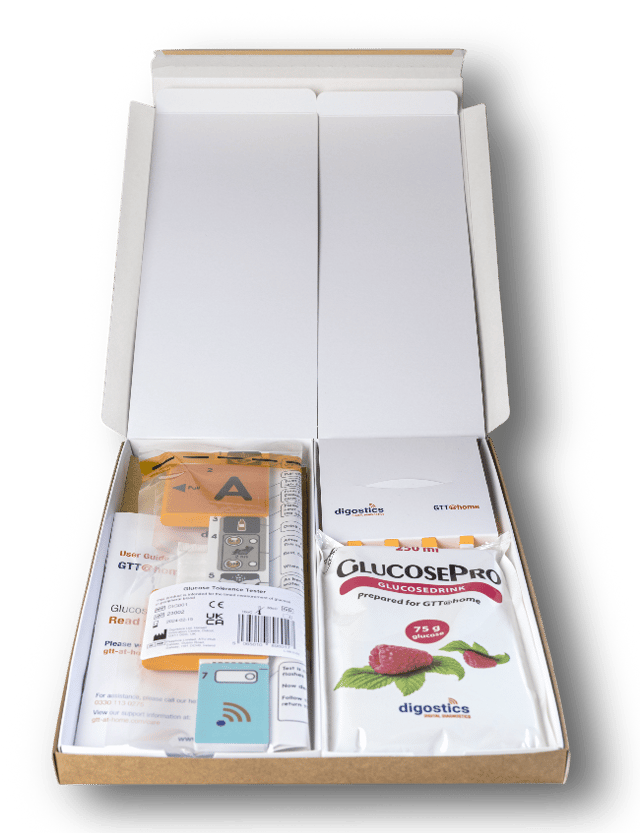
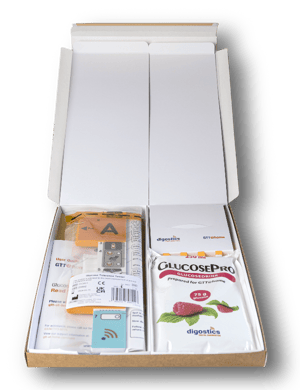
An image of the GTT@home test kit sent to patients for remote GDM testing.
GTT@home is CE-marked per Annex III of Directive 98/79/EC on in vitro diagnostic medical devices.
An image of the GTT@home test kit sent to patients for remote GDM testing.
GTT@home is CE-marked per Annex III of Directive 98/79/EC on in vitro diagnostic medical devices.

Looking for a better way to deliver OGTT? 

For patients, home testing offers privacy, comfort, and convenience. For healthcare professionals, it reduces the administrative burden of coordinating in-clinic tests, ensuring more consistent completion rates and reliable results that inform timely decision-making.

Whether for PCOS, endometriosis, fertility assessments, or other aspects of reproductive health, GTT@home provides a simple, patient-friendly way to deliver OGTTs. By making testing more accessible, it helps support better clinical pathways and outcomes in women’s health.

How does GTT@home work?

After you arrange a test via the Digostics booking and review portal, a GTT@home kit is posted directly to the woman’s home. She then watches the accompanying online guidance video and completes the OGTT by carefully following the step-by-step instructions included in the kit.

Our Customer Care team is on hand every day of the week to offer support whenever it’s needed. We also monitor for tests that may be approaching their test due date and reach out to those patients to ensure they stay on track. Once the completed results arrive, you’ll receive an alert prompting you to log back into the Digostics portal to finalise your clinical review.

We're making OGTT easier for everyone!

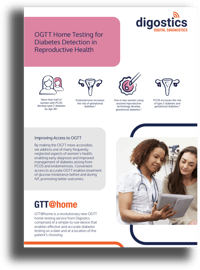
Download the GTT@home for Reproductive Health Datasheet

Digostics is proud to offer GTT@home - the most accessible and scalable way for women to be tested accurately and reliably for diabetes.

Register to download the GTT@home for reproductive health datasheet. 

How does GTT@home work?

It's incredibly easy!

Once you have scheduled a test through the Digostics test booking and review portal, we will send out a GTT@home test kit to the patient.  She then watches the adjacent online video guidance in preparation and follows the detailed instructions provided in the test kit to complete her OGTT.

And that's all there is to it!

Our dedicated Customer Care team is available every day of the week to provide any assistance needed.  Additionally, we proactively follow up with women who have tests at risk of becoming overdue. As soon as we receive their results, we will notify you to return to the Digostics portal to complete your expert review.

We're making OGTT easier for everyone!

GTT@home Logo - Blue-2
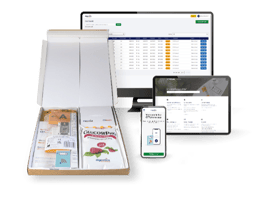
An image of the GTT@home test kit and ancillary mobile application, test booking and review portal and customer support.

Click the button below for more GTT@home product-specific information exploring:

•  the GTT@home test kit's contents
•  the novel GTT@home test device
•  at-home versus in-clinic test comparisons
•  patient and healthcare professional support

GTT@home Logo - Blue-2
An image of the GTT@home test kit and ancillary mobile application, test booking and review portal and customer support.

Click the button below for more GTT@home product-specific information exploring:

•  the GTT@home test kit's contents
•  the novel GTT@home test device
•  at-home versus in-clinic test comparisons
•  patient and healthcare professional support

Could GTT@home be of assistance to women in your care?

Please get in touch by completing the form below or calling Digostics on +44 (0)330 113 9145


Text_Smallerlogo

Check out the latest posts from Insights, the Digostics blog.

Healthcare professional showing patient results on a tablet

On the International Day of Girls and Women in Science, conversations often focus on...

Read more
An interview with Hugo Tewson about diabetes in the workplace.

For World Diabetes Day 2025, the International Diabetes Federation is focusing on the theme...

Read more
Healthcare professional showing patient results on a tablet

September marks Polycystic Ovary Syndrome (PCOS) Awareness Month. PCOS is a common endocrine...

Read more